602: Human-centered product design – with Ravi Sawhney
Subscribe: Apple Podcasts | Spotify | TuneIn
The Psycho-Aesthetics methodology that helps product managers design products customers love
Watch on YouTube
TLDR
In this episode of Product Mastery Now, Ravi Sawhney, designer and founder of RKS Design, joins me to share his 40+ years of insights on designing products customers love. He discusses the origins of Psycho-Aesthetics, a human-centered design methodology, and demonstrates how deep empathy and understanding of customer aspirations lead to emotionally resonant and commercially successful products. The episode is packed with practical examples, including how Ravi’s team used deep empathy to transformatively redesign the MiniMed insulin pump.
Introduction
Our guest today, Ravi Sawhney, has spent more than forty years designing products you’d recognize – from Teddy Ruxpin, the first animated talking bear, to RKS electric guitars, which won several design awards and were played by Mick Jagger, Keith Richards, and other artists, to a medical device that changed how an entire category of patients felt about themselves. He started his career at Xerox PARC, working on one of the very first touchscreen interfaces, when it was bleeding-edge technology. Along the way, he developed a methodology, Psycho-Aesthetics, that Harvard now teaches – a systematic way to design products people genuinely love, which is our goal as product professionals. Today, he’s still the founder and CEO of RKS Design, the design and innovation firm he started back in 1980, where he continues to help companies create products that connect powerfully with customers. In this episode, you’ll learn about creating such products that customers love.
Summary of Concepts Discussed for Product Managers
Human Behavior Informs Product Design
At Xerox, Ravi worked on one of the first touchscreens. As he watched customers interact with this new technology and worked with human-centered psychologists, he realized that product design is fundamentally about human motivation and behavior, not just functionality.
Great Products Create Emotional Connection
Ravi discusses why a purely functional product often fails to capture customer loyalty. He explains that products must provide emotional empowerment and self-actualization to create memorable experiences and lasting customer bonds.
What is Psycho-Aesthetics?
Ravi developed Psycho-Aesthetics, a systematic, repeatable methodology enabling innovators to adopt their customers’ perspectives and identify white space opportunities for product development, which are areas of unmet needs. This methodology goes beyond Design Thinking and is structured to be accessible to both product teams and students. Ravi’s group recently released an AI tool called PA-AI to help innovators apply Psycho-Aesthetics. Designed to be scalable and accessible (especially for students), the tool aims to reduce product failure rates by focusing on unmet customer needs.
Using Personas with Psycho-Aesthetics
Ravi uses personas to understand customers’ needs. His teams use ethnography to understand a market segment’s key attractors and then write a “help me” statement about the problem they need solved. This process helps product teams understand current needs and anticipate future aspirations, giving them a forward-looking edge.
Using Human-Centered Thinking to Redesign the Insulin Pump
Ravi tells the story of how he and the RKS team redesigned the MiniMed 507 insulin pump. Ravi and others on the design team lived out the experience of diabetic patients firsthand. They used insulin pumps that pumped saline and experienced the social stigma of using these medical devices in public. They realized that patients were choosing not to use the MiniMed insulin pump, although it could improve their length and quality of life, because of the stigma attached to being perceived as ill. The design team modified the device to look like a high-end pager, so patients could use it discretely. Removing the emotional barrier led to dramatic sales growth and improved quality of life for users.
Predict the Future and Think Globally
Ravi advises product managers to study their customers well enough to know not only what they say they need now but what they will need in the future. He also recommends that product managers think globally and have empathy for customers whose lives are very different from their own.
Useful Links
- Check out Ravi’s books, Psycho-Aesthetics 2.0 and Predictable Magic
- Learn more about Psycho-Aesthetics
- Visit the RKS Design website
- Check out PA-AI
Innovation Quote
“It’s not how you feel about the design or experience. It’s how it makes you feel about yourself.” – Ravi Sawhney
Application Questions
- How can you ensure your products create not only functionality but also make emotional connections to users?
- What methods can your team adopt to better anticipate white space opportunities instead of only reacting to current customer feedback?
- In what ways could ethnography or becoming the customer improve your understanding of users’ true needs and barriers?
- How might you leverage AI tools to support, rather than replace, a human-centered innovation process?
- Reflecting on your current product, what aspects of its experience help the user feel empowered and self-actualized? Where could this be improved?
Bio
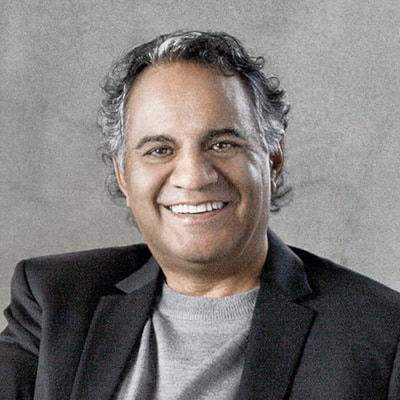
Ravi Sawhney has spent more than forty years at the forefront of product and technology innovation. He is a serial entrepreneur, business leader, author, lecturer, and thought leader on design and innovation. He is founder and CEO of RKS Design, a forty-year-old design and innovation firm that has developed solutions for clients in diverse industries, incubated companies, created licensed products, assembled a high-caliber team of colleagues, and accumulated accolades from the media and design juries.
Sawhney is also the inventor of the Psycho-Aesthetics® design methodology, which Harvard Business Press has explored as a business school case study. Psycho-Aesthetics® is the central focus of Predictable Magic, a book co-authored by Sawhney and published by Wharton School Publishing in 2010.
Thanks!
Thank you for taking the journey to product mastery and learning with me from the successes and failures of product innovators, managers, and developers. If you enjoyed the discussion, help out a fellow product manager by sharing it using the social media buttons you see below.